

Featuring stories from Eric Shanower, Troy Riser, Michael Tierney, and seventeen other masters of the form, FANTASTIC VOYAGES is all about doors --
WWE Remembered That Its Greatest Stories Had Already Been Told
FTC Statement: Reviewers are frequently provided by the publisher/production company with a copy of the material being reviewed.The opinions published are solely those of the respective reviewers and may not reflect the opinions of CriticalBlast.com or its management.
As an Amazon Associate, we earn from qualifying purchases. (This is a legal requirement, as apparently some sites advertise for Amazon for free. Yes, that's sarcasm.)
Submitted by Raven Oweiner on Mon, 08/03/2026 - 14:49
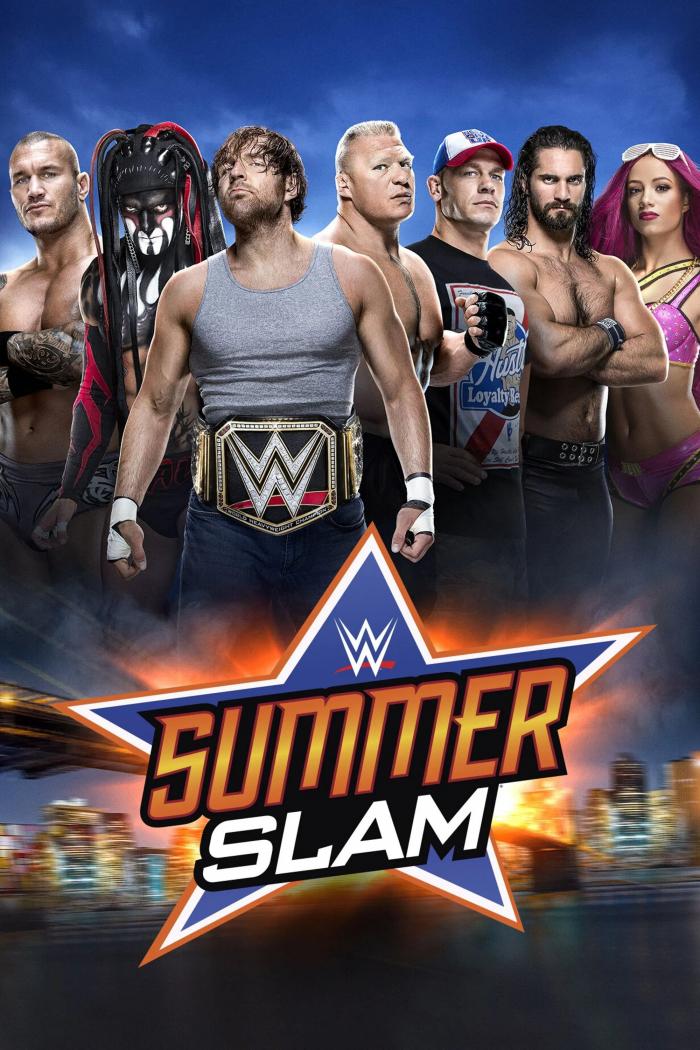
Late in the main event of SummerSlam, Roman Reigns looked down at a steel chair.
For most wrestling audiences, it was simply another weapon lying in the ring. For anyone who has followed WWE over the past decade, it represented something far more significant. Fourteen years earlier, Seth Rollins had used a steel chair to shatter The Shield, creating one of the defining betrayals of modern professional wrestling. That history hung over the match without anyone needing to explain it.
Commentary didn't stop to recap the moment. WWE didn't interrupt the action with an extended highlight package. The company simply trusted its audience to remember.
That decision became the defining strength of SummerSlam 2026.
Professional wrestling is often accused of relying too heavily on its past. Legends return. Classic rivalries are revived. Nostalgia can become a substitute for creativity. But SummerSlam demonstrated the difference between revisiting history and building upon it. The event's strongest moments weren't successful because they reminded viewers of yesterday—they succeeded because yesterday still mattered.
That's a distinction many forms of entertainment struggle to maintain.
Television seasons rarely last long enough for stories to unfold over several years. Film franchises routinely reboot themselves before their mythology grows too unwieldy. Even comic books periodically erase decades of continuity in search of a cleaner starting point for new readers.
Professional wrestling asks something different of its audience: it assumes you'll remember.
Sometimes that means recalling a rivalry from last month. Sometimes it means remembering a betrayal from fourteen years ago. Either way, the emotional investment belongs to the fans as much as the performers. When that investment pays off, the result can feel uniquely satisfying because the audience helped carry the story to its conclusion.
SummerSlam consistently found its footing whenever it embraced that philosophy.
Roman Reigns and Seth Rollins weren't simply competing for the World Heavyweight Championship. They were finishing a conversation that began when The Shield stood united. Chad Gable's long-awaited championship celebration resonated because viewers had watched him spend years proving he deserved the opportunity. Oba Femi's victory over Brock Lesnar carried weight because it felt less like an upset and more like one generation acknowledging the arrival of the next.
Those moments gave the weekend its emotional center.
That doesn't mean every creative decision worked. Sponsorships occasionally intruded on otherwise meaningful scenes, and a handful of booking choices seemed more interested in tomorrow's headlines than today's conclusions. Those shortcomings deserve criticism.
But they also reinforce the same point.
Whenever WWE trusted the stories it had already spent years telling, SummerSlam became compelling television. Whenever it reached for distractions beyond those stories, the illusion weakened.
The difference wasn't the quality of the wrestling.
It was the confidence to let history speak for itself.
When WWE Trusted Its History
The obvious place to begin is the main event, but Roman Reigns versus Seth Rollins wasn't the only match that benefited from WWE's willingness to let its past shape the present. It was simply the most visible example of a philosophy that quietly guided the strongest moments of the weekend.
Every meaningful exchange between Reigns and Rollins carried the weight of history. References to The Shield weren't included as nostalgic callbacks or crowd-pleasing Easter eggs. They were reminders that wrestling stories don't end when a championship changes hands or a feud officially concludes. Every alliance, betrayal, title victory and reconciliation becomes part of the next chapter. By the time Reigns paused over the steel chair, the audience wasn't reacting to the object itself. They were reacting to everything that chair represented, and WWE wisely trusted viewers to understand the difference.
Oba Femi's victory over Brock Lesnar told a very different story, but it succeeded for much the same reason. On the surface, it was a brutal Hell in a Cell match between two seemingly unstoppable forces. Beneath the violence, however, was a symbolic passing of the torch. Lesnar has spent years serving as WWE's measuring stick for physical dominance, and Femi didn't merely survive him—he earned the respect that followed. The embrace after the match carried more emotional weight than any table, chair or weapon because it acknowledged what the audience had just witnessed: the arrival of a new force without diminishing the legacy of the old one.
That willingness to reward long-term investment continued throughout the card. Chad Gable's Intercontinental Championship victory wasn't memorable because it shocked anyone. Quite the opposite. Fans had been waiting for Gable to receive a meaningful singles championship opportunity for years, and WWE finally allowed persistence to become part of the story. His celebration with his family in front of a hometown crowd wasn't simply a feel-good image; it was the natural conclusion to years of steady, often underappreciated work. Rather than asking viewers to forget the near misses that came before, WWE treated those disappointments as essential chapters leading to the payoff.
Chelsea Green's championship victory reflected a similar confidence in gradual character development. For years she occupied the role of comic relief, often stealing scenes through personality rather than dominance inside the ring. Instead of abruptly transforming her into a different performer, WWE allowed audiences to watch her credibility grow alongside her confidence. By the time she climbed the ladder to claim the Interim Women's Championship, the victory felt earned because the character had evolved naturally rather than being rewritten overnight.
Kevin Owens' return offered perhaps the clearest example of the difference between a surprise and a payoff. A lesser promotion might have treated his appearance as the entire story, asking the audience to celebrate the return itself. WWE understood that Owens already had unfinished business—with Sami Zayn, with the championship picture, and with fans who had spent seventeen months waiting to see him compete again. By immediately placing him back into meaningful contention, the company acknowledged that time away shouldn't erase everything that came before it.
Taken individually, these moments made SummerSlam an entertaining premium live event. Together, they revealed something far more significant. The weekend's emotional high points weren't driven by shocking twists or carefully guarded surprises. They were built on the simple idea that audiences remember more than promoters sometimes give them credit for, and that the strongest stories are often the ones that trust viewers to carry yesterday's emotions into today's match.
That's why the best parts of SummerSlam didn't feel manufactured. They felt earned.
When WWE Got in Its Own Way
For all of SummerSlam's strengths, the weekend also revealed the limits of WWE's current presentation. The company has become remarkably good at building long-term emotional investment, but it occasionally undermines that investment by drawing attention away from the stories unfolding in the ring. Whenever that happened, the event briefly stopped feeling like the conclusion of a narrative and started feeling like a television production.
The clearest example came during CM Punk's successful defense of the Undisputed WWE Championship against Cody Rhodes. For much of the match, both men did exactly what they've built their reputations on: they allowed the drama to unfold patiently, giving every near fall and every momentum shift room to breathe. Randy Orton's return certainly created an exciting moment, but it also redirected the audience's attention away from the championship itself. By the time the match ended, much of the conversation had shifted from Punk's victory to what Orton's return meant for the next premium live event, leaving the championship match feeling less like a destination than a stepping stone.
The two-night format presents a similar challenge. Splitting SummerSlam across an entire weekend gives WWE more space to showcase its roster and allows major feuds to avoid competing for attention on the same card. At the same time, it creates an unavoidable comparison between the two evenings, and this year Night Two carried significantly more emotional weight than Night One. Saturday featured several outstanding matches, but Sunday delivered more of the moments that felt like genuine conclusions rather than chapters waiting for another installment.
The event's growing corporate presentation also deserves scrutiny. Wrestling has always relied on sponsors, and few fans object to that reality in principle. The problem arises when sponsorships become active participants in the show through branded props, promotional graphics, celebrity integrations and constant reminders of the business surrounding the event. Those elements rarely enhanced the stories being told, and in several cases they interrupted moments that had already earned the audience's complete attention without any additional marketing.
What's striking is how unnecessary those distractions ultimately proved to be. The loudest reactions of the weekend weren't generated by logos, product placement or celebrity appearances. They came from Roman Reigns confronting the history he shared with Seth Rollins, Chad Gable finally celebrating a championship years in the making, and Brock Lesnar acknowledging Oba Femi as a worthy successor. Those scenes succeeded because they respected the audience's emotional investment rather than trying to manufacture a new one.
None of these criticisms diminish what SummerSlam accomplished. In fact, they reinforce the central lesson of the weekend. Whenever WWE allowed its performers and their histories to carry the story, the event reached an emotional level that few forms of entertainment can consistently match. Whenever the production itself demanded equal attention, the illusion weakened—not because the wrestling failed, but because the storytelling briefly took a back seat to the spectacle surrounding it.
The Bell Rings, but the Story Doesn't End
Professional wrestling has spent decades defending itself against critics who dismiss it as predetermined entertainment. That argument has always missed the point. Fans don't invest in wrestling because they believe the outcomes are real; they invest because they believe the emotions are. SummerSlam 2026 served as a reminder that, when WWE commits to long-term storytelling, those emotions can feel as authentic as anything found in film, television or literature.
The weekend's defining moments weren't built around surprise alone. Roman Reigns and Seth Rollins carried fourteen years of shared history into the ring without needing to explain why it mattered. Chad Gable's championship celebration resonated because it reflected years of perseverance rather than a sudden creative decision. Brock Lesnar's acknowledgment of Oba Femi conveyed more through a simple gesture than many promotions manage with months of exposition. None of those scenes existed in isolation; each represented a story that had been unfolding long before SummerSlam arrived.
That's ultimately where WWE distinguished itself from many modern entertainment franchises. Movies frequently reboot themselves before their mythology becomes too cumbersome. Television series often disappear before they have the opportunity to complete the stories they began. Even comic books periodically erase decades of continuity to make room for new readers. Professional wrestling has the rare advantage of treating its own history as an asset rather than an obstacle, allowing the past to remain an active participant in the present.
SummerSlam wasn't flawless, and it didn't need to be. The event occasionally became distracted by its own production, leaning too heavily on sponsorships, celebrity appearances and future storylines that momentarily pulled attention away from the matches themselves. Those decisions prevented the weekend from reaching its full potential, but they never completely overshadowed what WWE accomplished when it simply trusted the performers to tell their stories.
In the end, what lingers isn't a sponsored table, a promotional graphic or a carefully orchestrated surprise. It's Roman Reigns looking down at a steel chair that carried fourteen years of history. It's Chad Gable embracing his family after finally reaching the mountaintop. It's Brock Lesnar stepping aside to acknowledge that a new generation had arrived. Those are the moments that remain because they were earned over time rather than manufactured in an instant.
Rating
SummerSlam 2026 wasn't a perfect premium live event, but it was an encouraging one. It demonstrated that WWE still understands its greatest competitive advantage isn't its production budget or its ability to generate headlines. It's the willingness to tell stories that reward audiences for remembering, and to trust that the investment fans made years ago can still produce meaningful payoffs today.


FEATURED ALBUM

Songs of faith, family and moving forward.
Latest Release


